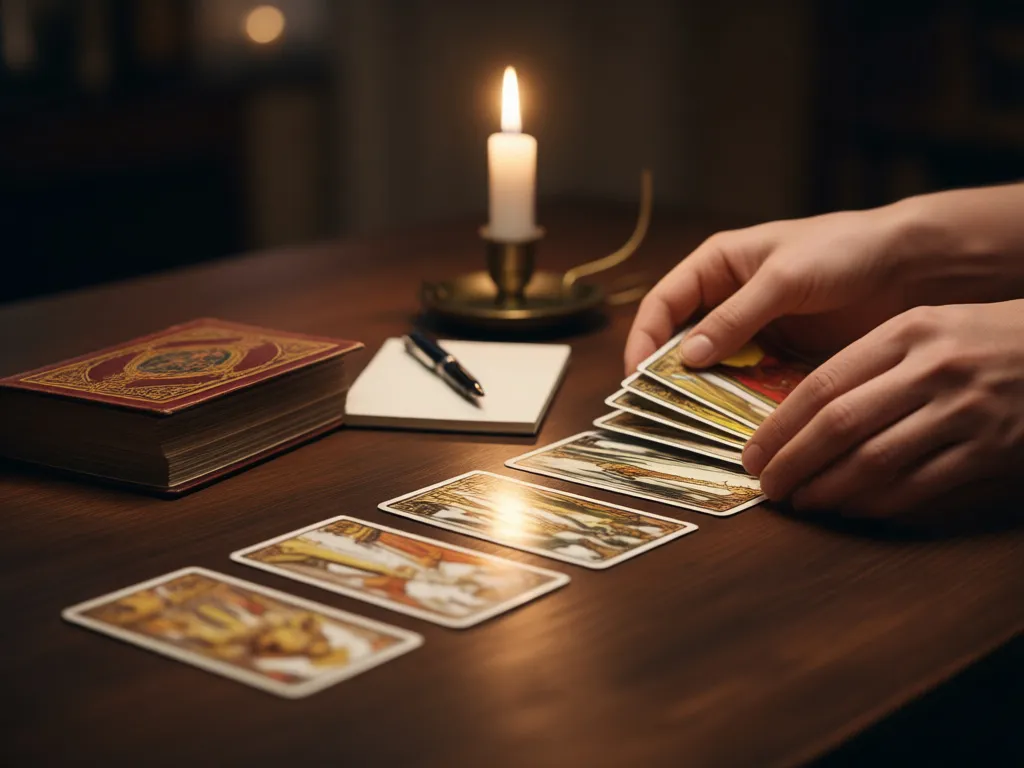
Choosing a Deck That Resonates
Begin by selecting a tarot deck that feels personal and intuitive. The artwork, symbolism, and cultural background of the cards influence how you connect with the images. A deck that you enjoy handling will make the entire process smoother and enhance the clarity of the messages you receive.
Preparing the Physical Space
Create a quiet area where you will not be disturbed. Clear the surface, lay down a cloth if you prefer, and arrange any tools you use, such as candles, crystals, or incense. A tidy environment helps the mind settle and signals to the subconscious that a focused divination session is beginning.
Grounding and Centering Your Energy
Before touching the cards, take a few breaths, feel your feet on the floor, and imagine a gentle connection to the earth. This grounding practice steadies emotional fluctuations and aligns your personal energy with the neutral space of the cards, allowing you to receive information without excess interference.
Formulating a Clear Question
State your inquiry in a specific, open‑ended way. Instead of asking “Will I be happy?” try “What steps can I take to increase my sense of fulfillment in the coming months?” A well‑phrased question guides the cards toward actionable insight rather than vague predictions.
Shuffling with Intent
Hold the deck in both hands and shuffle while keeping your question in mind. The rhythm of the shuffle matters less than the focus you maintain. When the cards feel ready—often indicated by a natural pause or a subtle feeling of completion—stop shuffling and place the deck face down.
Selecting the Right Spread
Choose a layout that matches the scope of your question. For daily guidance a simple three card spread covering past, present, and future works well. For more complex matters a seven card Celtic Cross offers depth without overwhelming a beginner. The spread determines how each position will shape the interpretation.
Dealing the Cards in Order
Draw the required number of cards from the top of the deck, placing each into its designated position without looking ahead. This sequential dealing respects the flow of energy from the deck into the layout and prevents unconscious bias from influencing which card lands where.
Reading the Cards: Symbols, Positions, and Reversals
Examine each card individually. Observe the central figure, colors, surrounding objects, and any subtle details. Relate these symbols to the meaning of the card’s position in the spread. If a card appears upside down, consider whether the energy is blocked, internalized, or needs a different perspective. Combine the literal symbolism with the positional influence to form a nuanced interpretation.
Connecting the Narrative
After interpreting each card, weave them together into a coherent story. Look for recurring themes, contrasting elements, and how the flow from one position to the next evolves. The narrative should answer the original question while highlighting any advice or warning the cards present.
Recording and Reflecting on the Reading
Write down the spread, your interpretations, and any immediate feelings in a dedicated journal. Include the date, the question asked, and any external circumstances that may be relevant. This record creates a reference point for later verification and helps you notice patterns in your own growth.
Reviewing Over Time for Accuracy
Revisit past readings after a reasonable period. Compare the outcomes with the guidance you received. Honest assessment refines your skill, teaches you which symbols resonate most personally, and builds confidence in the reliability of your practice.
Leave a Reply