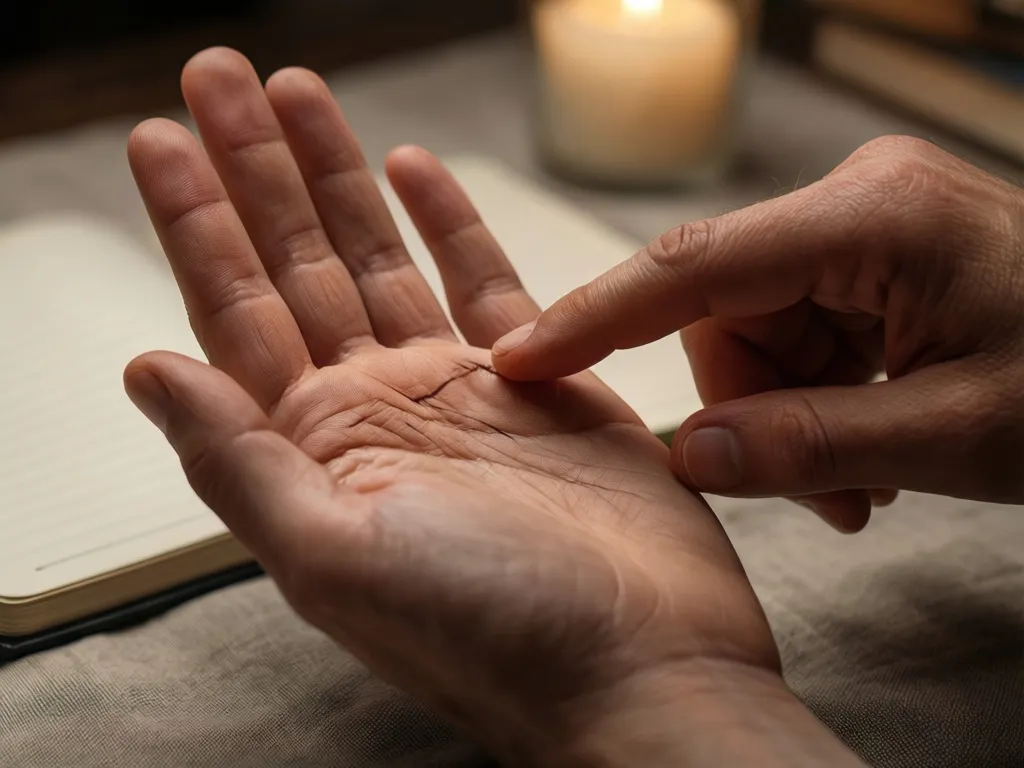
Major Lines and Their Core Meanings
Every palm displays a set of principal lines that most traditions consider the first clues to personality and life trends. The most commonly examined lines are the heart line, head line, life line and fate line. Each line varies in length, depth and curvature, and these variations are interpreted in the context of the whole hand.
Heart Line
The heart line runs across the upper part of the palm, typically beginning under the index finger and ending near the little finger. A deep, clear heart line suggests an open emotional nature, while a faint or broken line can indicate guarded feelings or emotional turbulence. The shape of the curve also offers insight: a pronounced upward sweep often points to optimism, whereas a shallow or straight line may reflect a more measured emotional approach.
Head Line
The head line is located just below the heart line and stretches from the edge of the palm near the thumb toward the center of the palm. A long, deep head line is associated with analytical thinking and a strong capacity for concentration. Shorter or fragmented segments can signal a preference for hands‑on learning or a tendency toward spontaneous decision making.
Life Line
Running from the edge of the palm near the thumb down toward the wrist, the life line is often mistakenly linked to lifespan. In reality, it reflects vitality, resilience and the way a person navigates major life phases. A strong, unbroken life line generally indicates robust energy, while a shallow or heavily broken line may suggest periods of stress or health challenges that require attention.
Fate Line
Also called the line of destiny, the fate line begins near the base of the palm and ascends toward the middle finger. Not everyone has a visible fate line, and its presence is interpreted as an external influence on career or life direction. A straight, deep fate line can denote a clear sense of purpose, whereas a wavy or interrupted line may suggest changing ambitions or unexpected opportunities.
Understanding the Mounts
Raised areas of flesh on the palm, known as mounts, are named for the planets they represent. Each mount corresponds to a particular trait and, when examined together, they create a nuanced personality profile.
Mount of Venus
Located at the base of the thumb, this mount relates to love, sensuality and personal magnetism. A well‑developed mount of Venus often signals a warm, affectionate personality, while a flat mount may indicate a more reserved approach to relationships.
Mount of Jupiter
Found under the index finger, this mount reflects ambition, confidence and leadership qualities. A prominent mount of Jupiter is a sign of natural authority and optimism; a subdued mount can point to humility or a need to build self‑esteem.
Mount of Saturn
Positioned below the middle finger, the mount of Saturn is linked to discipline, responsibility and practicality. A strong Saturn mount often denotes a diligent, methodical nature, whereas a faint mount may suggest a more carefree or spontaneous outlook.
Mount of Apollo
Also called the mount of the sun, it lies beneath the ring finger and is associated with creativity, charisma and joy. A well‑formed mount of Apollo signals artistic talent and a zest for life; a low mount can indicate a more pragmatic or introverted temperament.
Mount of Mercury
Located under the little finger, this mount governs communication, curiosity and adaptability. A pronounced mount of Mercury suggests quick wit and social ease, while a flat mount may point to a more reflective or solitary communication style.
Basic Hand Shapes and Their Themes
Palmists classify hands into four elemental types – earth, air, water and fire – each reflecting a core temperament. Recognizing the dominant shape helps to contextualize the line and mount readings.
Earth Hands
These hands have square palms, short fingers and thick, sturdy mounts. They are grounded, practical and reliable. An earth hand often emphasizes the mount of Saturn and a solid life line, highlighting stability and a methodical approach to challenges.
Air Hands
Air hands feature square or rectangular palms with long, slender fingers and prominent mounts of Mercury and Jupiter. They are intellectual, communicative and adaptable. The head line on an air hand frequently appears deep and well‑defined, underscoring analytical strengths.
Water Hands
Characterized by long palms, long fingers and a soft, flexible texture, water hands convey emotional depth and intuition. The heart line on a water hand tends to be curved and expressive, and the mount of Venus is often pronounced.
Fire Hands
Fire hands have square or rectangular palms, short fingers and a generally firm texture. They radiate enthusiasm, confidence and leadership. The mount of Jupiter usually stands out, and the fate line, when present, may be bold and direct.
Practical Steps for a First Reading
When you sit down with a new client or your own hand, follow these straightforward actions to keep the reading focused and reliable.
- Cleanse the space with a simple intention to create a calm environment.
- Ask the querent to relax the hand and place it palm up on a flat surface.
- Observe the overall hand shape first, noting the element that fits best.
- Scan the mounts from thumb to little finger, noting which are raised and which are flat.
- Move to the major lines, tracing each from start to finish, and record any breaks, forks or unusual curves.
- Synthesize the observations, linking the dominant hand element, the strongest mounts and the most pronounced lines to form a concise interpretation.
Remember to keep the language clear and avoid speculative statements that cannot be supported by the visible features of the hand.
Common Questions New Practitioners Face
What does a missing mount mean? A mount that appears flat simply suggests that the associated planetary influence is less active in the person’s life. It does not indicate a deficiency, only a lower emphasis.
Can I read both hands at once? Many traditions advise starting with the dominant hand for traits that are actively expressed, then using the non‑dominant hand to explore potential or subconscious patterns.
How often should I practice reading palms? Regular practice, even a few minutes daily, helps develop familiarity with subtle variations. Keeping a simple journal of observations accelerates learning.
By integrating line analysis, mount awareness and hand shape identification, a beginner can move beyond surface impressions to a richer, more balanced palm reading experience.
Leave a Reply