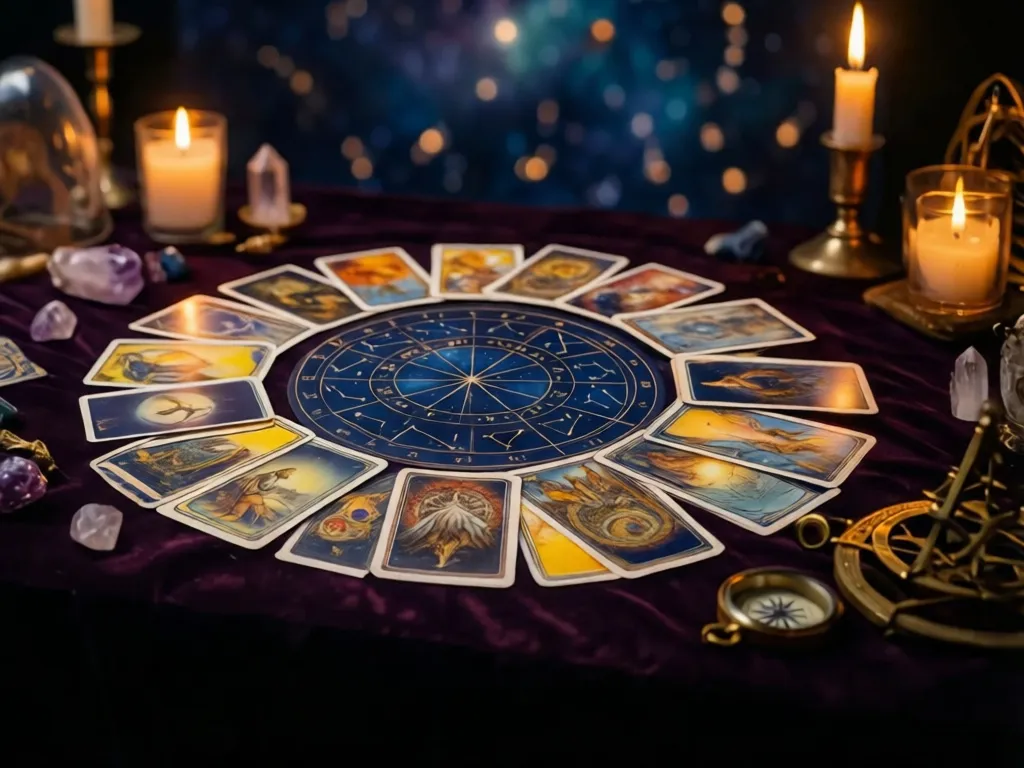
Connecting the Four Elements
The first step in linking tarot and astrology is to recognize the shared elemental framework. The four classical elements—fire, earth, air and water—appear in both systems. In tarot the suits of Wands, Pentacles, Swords and Cups each embody one element. In astrology the fire signs are Aries, Leo and Sagittarius; the earth signs are Taurus, Virgo and Capricorn; the air signs are Gemini, Libra and Aquarius; the water signs are Cancer, Scorpio and Pisces. By pairing a suit with its elemental group you create a basic correspondence that can be applied to any reading.
Suit to Sign Mapping
Beyond the element level, each individual sign can be related to a specific card or group of cards. The associations below follow traditional occult literature and are widely accepted among practitioners.
Wands – Fire Signs
Aries resonates with the Ace of Wands, the spark of new initiative. Leo aligns with the Strength card, reflecting heroic confidence. Sagittarius matches the Temperance card, emphasizing the quest for higher purpose and balanced expansion.
Pentacles – Earth Signs
Taurus is echoed in the Four of Pentacles, a symbol of material stability and security. Virgo pairs with the Hermit, highlighting practical wisdom and attention to detail. Capricorn connects with the Devil, revealing the material challenges that test perseverance.
Swords – Air Signs
Gemini corresponds to the Two of Swords, representing dual perspectives and mental agility. Libra aligns with Justice, the archetype of balanced judgment. Aquarius mirrors the Star, a card of visionary insight and intellectual freedom.
Cups – Water Signs
Cancer is reflected in the Ten of Cups, a picture of emotional fulfillment and family harmony. Scorpio corresponds to Death, a transformative passage through deep emotional currents. Pisces pairs with the Moon, inviting exploration of intuition and dream‑like states.
Major Arcana and Planetary Rulings
Each major arcana card also carries a planetary ruler. By noting the planet you can further refine the zodiac influence. For example, The Emperor is ruled by Aries‑Mars, reinforcing themes of authority and assertive action, while The High Priestess is linked to the Moon and therefore to Cancer and Pisces, underscoring inner knowing and psychic receptivity.
Applying Correspondences in a Spread
When you design a spread, consider the question’s dominant element. If the inquiry relates to career progress, you may start with a fire suit card to assess initiative, then bring in an earth suit for practical steps, followed by an air suit for strategic planning, and finish with a water suit to gauge emotional alignment.
Here is a practical flow for a four‑card spread without using a list format. The first position draws a card from the suit that matches the element of the question. The second position introduces the zodiac sign that best reflects the querent’s current challenge. The third position selects a major arcana linked to the planetary ruler of that sign, offering a deeper thematic layer. The final position presents a card from the opposite element, suggesting a balancing influence that can guide the outcome.
Blending Timing and Zodiac Energy
Astrological timing can give added potency to a tarot reading. If you perform a reading during a period when the Sun is in a sign that matches the suit you are focusing on, the dominant planetary energy can amplify the message. For instance, a reading centered on Wands conducted while the Sun travels through Leo may highlight leadership themes more strongly.
Moon phases also matter. The waxing Moon supports growth and new ideas, making it an ideal moment for cards that represent beginnings such as the Ace of Cups or Ace of Wands. The waning Moon encourages release, complementing cards like the Ten of Swords or the Tower that signal endings.
Practical Tips for Consistent Use
To keep the system reliable, record each reading with the zodiac correspondences you employed. Note the sign, the associated card, and any planetary influences. Over time patterns will emerge, allowing you to fine‑tune your intuition and recognize which correspondences resonate most for you.
Another useful habit is to study the mythological stories behind each sign and compare them with the narrative imagery of the tarot cards. The tale of Perseus, for example, mirrors the Hero’s Journey found in the Fool’s progression through the Major Arcana, and Perseus is ruled by the sign of Sagittarius. Linking myth, sign and card creates a rich tapestry that deepens interpretive insight.
Ethical Considerations
When you bring zodiac energy into a reading, remember that astrological charts are personal. Always ask for consent before using a client’s birth data to calculate a natal influence. If a querent does not wish to explore zodiac themes, respect that boundary and focus on the plain tarot symbolism.
Finally, avoid claiming absolute predictions based on astrology. Use the correspondences as a tool for reflection, not as a deterministic forecast. The goal is to open doors for self‑awareness, not to dictate fate.
Leave a Reply