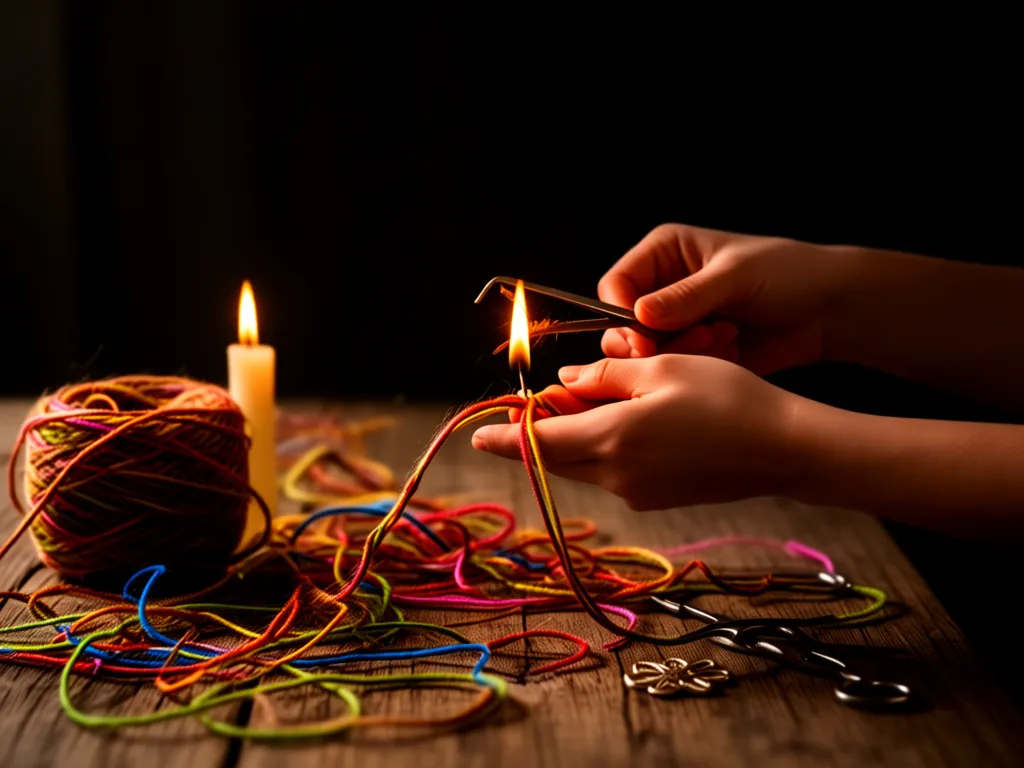
What the Ritual Represents
In many traditions a cord symbolizes a subtle energetic link between two entities. When the connection becomes limiting, the cord is seen as a conduit for unwanted emotions, patterns or obligations. Cutting the cord therefore declares personal sovereignty and invites a fresh flow of intention.
When to Consider a Cord Cutting Practice
Not every challenge requires a formal ritual. The practice is most useful when:
- you feel repeatedly drawn back into a relationship that no longer serves you
- habitual thoughts keep you stuck in a past trauma
- you sense an invisible attachment that drains your vitality
Before beginning, ask yourself whether the issue is rooted in external circumstances or internal perception. If the former, practical boundaries may be more appropriate; if the latter, the ritual can provide a symbolic reset.
Preparing the Space
Creating a dedicated environment signals to the subconscious that a transformation is underway. Follow these simple actions:
- Select a quiet room where you will not be interrupted for the duration of the work.
- Clear the area of clutter; a tidy surface mirrors a clear mind.
- Place an object that represents the attachment – a photograph, a letter, a piece of jewelry – in front of you.
- Light a single candle of a neutral hue such as white or soft amber to ground the space.
Grounding yourself with a few deep breaths helps you shift attention away from daily concerns and toward the present intention.
Step by Step Procedure
1. Define the Connection
State aloud what the cord represents. Use precise language: “I acknowledge the recurring feeling of resentment toward my former boss.” This declaration frames the energy you intend to release.
2. Visualise the Cord
Close your eyes and picture a luminous thread extending from your heart center to the object representing the other side. Give the cord a color that feels appropriate – red for passion, gray for stagnation, or any hue that resonates with you.
3. Choose a Cutting Tool
Any item that can symbolically sever a line works: a pair of scissors, a ceremonial knife, or even a feather held in a decisive motion. The tool itself need not be sharp; its power lies in your intention.
4. Perform the Cut
While maintaining your visualisation, move the tool through the imagined cord. Speak a phrase that confirms the release, such as “I now free myself from this bond.” Feel the instant of separation as a subtle shift in your chest.
5. Seal the New Boundary
Place your hands over the heart and inhale deeply, inviting fresh energy to fill the space once occupied by the cord. You may also sprinkle a few drops of water or a pinch of salt on the object as a protective seal.
6. Ground and Close
Extinguish the candle, thank the space for its support, and rise slowly. Grounding can be as simple as touching the floor or stepping outside for a brief walk.
Aftercare Practices for Lasting Release
The energetic shift does not end with the cut. Ongoing care reinforces the new pattern and prevents old habits from resurfacing.
Journaling
Write about the experience within 24 hours. Note any emotions, physical sensations or thoughts that arise. Re‑reading these entries weeks later provides evidence of progress.
Movement
Engage in gentle activity such as yoga, tai chi or a brisk walk. Physical motion helps circulate the released energy and integrates it into the body.
Periodic Reaffirmation
For the next seven days, spend a few minutes each morning visualising the cord fully absent. This reinforces the mental map of a free flow.
Avoid Re‑Attachment Triggers
If you notice recurring thoughts about the former attachment, pause and ask if you are feeding the old pattern. Replace the habit with a constructive activity – reading, creative work or a brief meditation.
Common Questions About Cord Cutting
Is the ritual safe for beginners? Yes, when performed with clear intention and without harmful substances. The most important safety factor is emotional readiness.
Can I repeat the ritual? Repeating is acceptable if the attachment resurfaces or if you feel the initial release was incomplete. Each session should be approached as a fresh intention.
How long should aftercare last? There is no fixed timeframe. Many practitioners observe noticeable shifts within a week, while deeper patterns may require ongoing attention for a month or more.
Integrating Cord Cutting With Other Practices
For those who already work with lunar phases, aligning the cut with a waning moon can amplify the sense of release. Similarly, pairing the ritual with a short mantra meditation or a breathwork sequence deepens the energetic impact.
Remember that the ritual is a symbolic tool, not a substitute for professional counseling when dealing with trauma or severe emotional distress. Combining cord cutting with therapeutic support often yields the most balanced results.
Leave a Reply