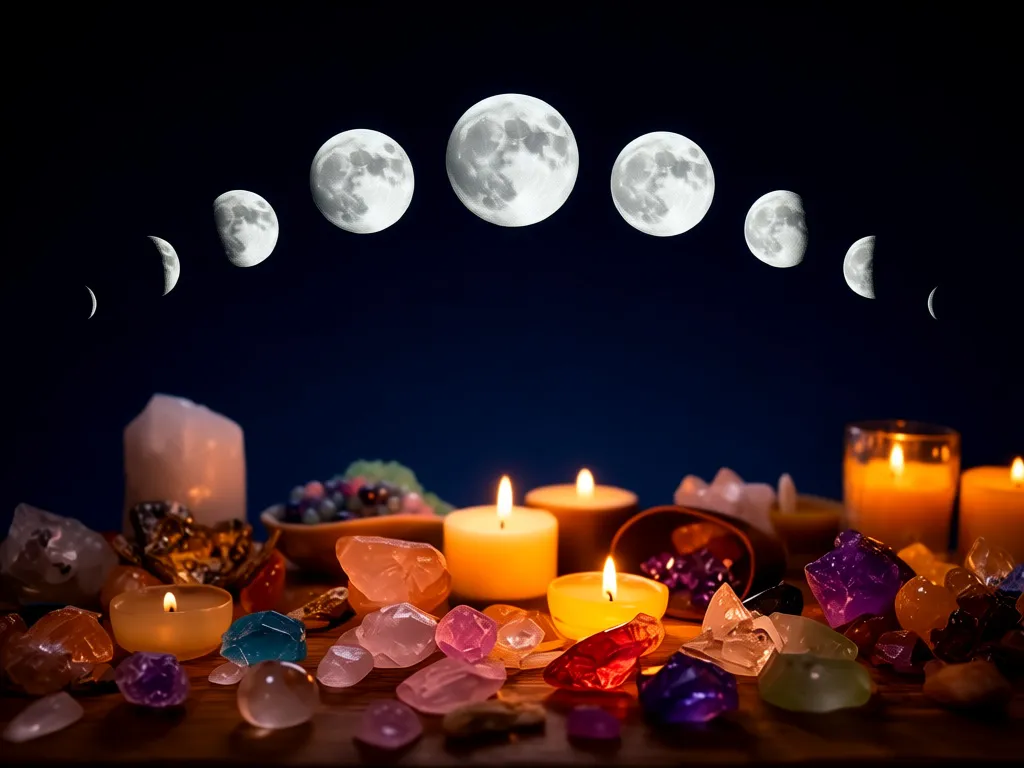
Understanding Lunar Influence
The Moon moves through a predictable cycle of light and shadow, and each stage carries a distinct energetic quality. Ancient practitioners observed that the Moon’s rhythm mirrors the flow of desire, growth, culmination and release. By matching the purpose of a ritual to the character of a particular phase, you work with natural currents rather than against them. This alignment can make a manifestation effort feel effortless, as if the phase itself is carrying the intention forward.
New Moon for Initiating Intent
The moment the Moon disappears from view marks a fresh start. It is a time of quiet, a blank canvas on which new ideas can be painted. A ritual performed at this time should focus on planting seeds of desire. Choose a clear statement of what you wish to bring into existence, write it on paper, and charge the paper with your breath. The darkness of the new Moon creates a protective veil, allowing the intention to form without external distraction.
Waxing Crescent for Building Momentum
As a sliver of light appears, the energy begins to expand. This phase supports actions that nurture the seed you set on the new Moon. Ritual work here benefits from movement, such as walking a short distance while repeating a brief affirmation, or drawing a simple symbol that represents growth. The subtle increase of light reinforces the belief that the goal is moving forward, helping you maintain confidence as you take successive steps.
First Quarter for Decision Making
The half‑lit Moon offers a moment of balance between initiation and completion. It is an optimal time to clarify choices that affect the outcome of your manifestation. Pose a clear question to the lunar energy, listen for inner guidance, and record any insights. This phase encourages decisive action, providing the mental structure needed to turn a vague desire into a concrete plan.
Waxing Gibbous for Refinement
When the Moon is almost full, its light is bright but not yet at peak intensity. This is a period for fine‑tuning details. Review the components of your spell—ingredients, timing, wording—and adjust any element that feels out of alignment. The near‑full glow supports precision, allowing you to perfect the recipe before the final amplification.
Full Moon for Amplifying and Releasing
The Full Moon radiates its maximum power, making it the most potent moment for both strengthening desire and letting go of obstacles. A manifestation ritual performed under the full light can draw abundant energy to the intention, while a release spell can dissolve limiting beliefs. To work with the Full Moon, stand in a clear space, raise your arms toward the sky, and visualize the lunar light filling the intention and dissolving any resistance. The bright illumination also offers a vivid mirror for self‑reflection, showing where adjustments may still be needed.
Waning Gibbous for Gratitude
After the peak, the Moon begins to recede. This phase is suited for acknowledging progress and expressing gratitude. Offer a token of thanks—such as a small offering of herbs or a spoken appreciation—to the lunar energy. Gratitude reinforces the bond between you and the intention, creating a positive feedback loop that supports future work.
Last Quarter for Clearing
The half‑dark Moon invites the removal of excess and the clearing of pathways. Perform a ritual that symbolically cuts ties with old patterns that could hinder the manifested goal. This can be as simple as visualizing a dark ribbon being slashed, or physically tearing a piece of paper that lists limiting thoughts. The waning light assists in releasing, ensuring that the path ahead remains open.
Waning Crescent for Integration
The final dimming of the Moon offers a quiet moment for integration. Reflect on the entire cycle, noting what worked and where adjustments are needed. This is a time to rest, allowing the energy you have invested to settle into the subconscious. By honoring the closing phase, you prepare the ground for the next new Moon, creating a seamless loop of intention work.
Practical Tools for Moon Phase Work
While the phases themselves provide a strong framework, certain tools can deepen the connection. Crystals such as clear quartz for amplification, moonstone for intuition, and black tourmaline for protection each resonate with specific phases. Choose a candle color that matches the mood of the phase—white for purity on the new Moon, silver for illumination on the Full Moon—and light it at the start of the ritual. Incorporating a simple journal entry after each ritual helps track subtle shifts and reinforces learning.
Designing a Personal Moon Phase Ritual
Begin by selecting the phase that aligns with your current goal. Write a concise intention statement, keeping it positive and present tense. Gather any chosen tools—crystal, candle, herb—and arrange them in a way that feels natural. Open the space with a short breath work exercise, then call upon the Moon’s energy in a few sentences. Perform the core action of your ritual—whether it is speaking the intention, drawing a sigil, or placing a token on an altar—and close by thanking the Moon and extinguishing the candle. Record the experience in a journal, noting the date, phase, and any sensations that arise.
By honoring the Moon’s rhythm and tailoring each ceremony to the specific qualities of the current phase, you can turn ordinary spellwork into a fluid, self‑reinforcing practice. The lunar cycle becomes a partner that carries your desires forward, amplifies your efforts, and gently releases what no longer serves you. As you repeat this pattern month after month, the consistency itself becomes a powerful catalyst, embedding your intentions deep within the natural flow of light and shadow.
Leave a Reply