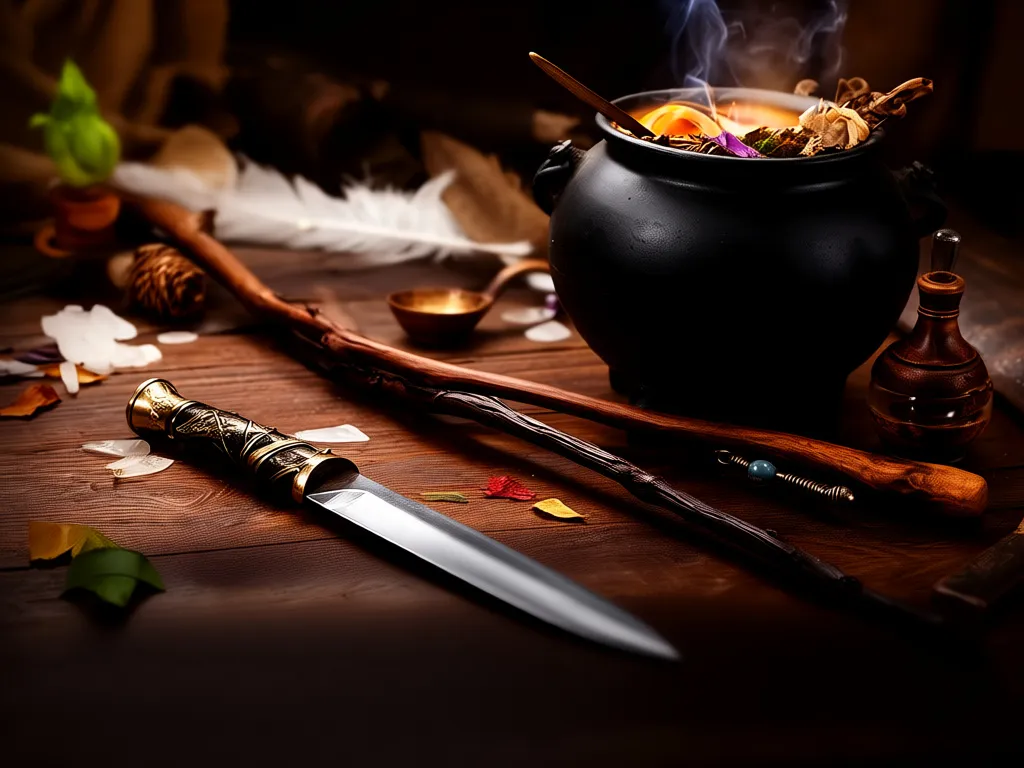
The Athame: Symbolic Blade and Practical Uses
Historical Roots
The athame first appears in early ceremonial traditions where a double edged blade represented the element of fire and the power to direct intention. Its name derives from an old French term for a knife used by craftsmen, later adopted by occult societies in the nineteenth century.
Material Choices
Practitioners often select a steel or copper blade for durability, while some prefer a wooden handle for a softer tactile connection. The choice of metal can reflect personal resonance with planetary correspondences, such as iron for Mars or copper for Venus.
Ritual Functions
In a ritual the athame is primarily used to cut energetic circles, to point at directional points on an altar, and to direct the flow of spell energy without physically harming anything. It is also employed to invoke the element of fire in ceremonial invocations.
The Wand: Channeling Energy Through Wood
Origins in Folk Traditions
Wands have been used by healers and shamans across cultures as extensions of the practitioner’s will. In European folklore a wand was often a branch from a sacred tree, used to bless or protect a space.
Choosing Wood
Each type of wood carries its own symbolism; oak is linked to stability, willow to intuition, and cedar to purification. Selecting a piece that feels resonant can deepen the connection during spell work.
Common Applications
The wand is raised to draw down energy from the heavens, to trace sigils in the air, and to focus intention during lighting of candles or incense. It can also be used to direct the flow of a potion poured from a cauldron.
The Cauldron: Vessel for Transformation
Cultural Lineage
Cauldrons appear in mythic stories from the Greek hearth goddess Hestia to the Celtic goddess Cerridwen, each embodying the theme of transformation. In witchcraft the cauldron represents the element of water and the womb of creation.
Size and Material
Small iron or brass cauldrons are favored for personal work, while larger ceramic bowls serve communal gatherings. The metal choice influences how the cauldron conducts heat, which can be relevant for fire based brew rituals.
Ritual Roles
A cauldron may hold herbal infusions, simmered potions, or serve as a focal point for scrying. It also acts as a symbolic container for releasing negativity, where participants cast unwanted thoughts into the simmering brew before discarding the residue.
Integrating the Three Tools in a Balanced Workbench
Layout Principles
Many practitioners arrange the athame on the left side of the altar, the wand at the center, and the cauldron on the right, reflecting a flow from intention to channeling to transformation. This arrangement mirrors the progression of a spell from conception to execution.
Personalization Tips
Engraving a sigil on the athame handle, wrapping the wand with cord of a chosen color, or seasoning a cauldron with oil and herbs can imprint personal meaning. Regular cleansing with salt water or incense keeps the tools energetically clear.
By understanding the historical background, material significance, and functional roles of each tool, practitioners can craft a ritual environment that supports both tradition and personal expression.
Leave a Reply