Historical Perspectives
References to leaving the physical body appear in many ancient traditions. Egyptian funerary texts describe the soul travelling beyond the tomb, while Hindu scriptures such as the Upanishads speak of the subtle body separating from the material form during deep meditation. Classical Greek writers, including Plato, used the phrase “the soul’s ascent” to illustrate a journey beyond the senses. Across these cultures the experience is often linked to spiritual development rather than a recreational activity.
Ritual Contexts
In shamanic societies the ability to move beyond ordinary perception is framed as a duty to the community. The Siberian shaman, for example, enters a trance state through drumming and breath work, emerging with knowledge meant to heal the tribe. Similar motifs appear in Tibetan Buddhist practices where the practitioner visualises a luminous body moving through mandalas. Although the terminology varies, the underlying phenomenon resembles what contemporary practitioners call an out‑of‑body experience.
Literary Accounts
During the Enlightenment, writers such as Henry Sullivan documented personal accounts of “astral travel” that blended mystical language with emerging scientific curiosity. In the early twentieth century, the Society for Psychical Research collected testimonies of individuals claiming to observe their surroundings while physically immobile. These historic records provide a foundation for modern inquiry, even though they lack the methodological rigor demanded by contemporary science.
Modern Scientific Studies
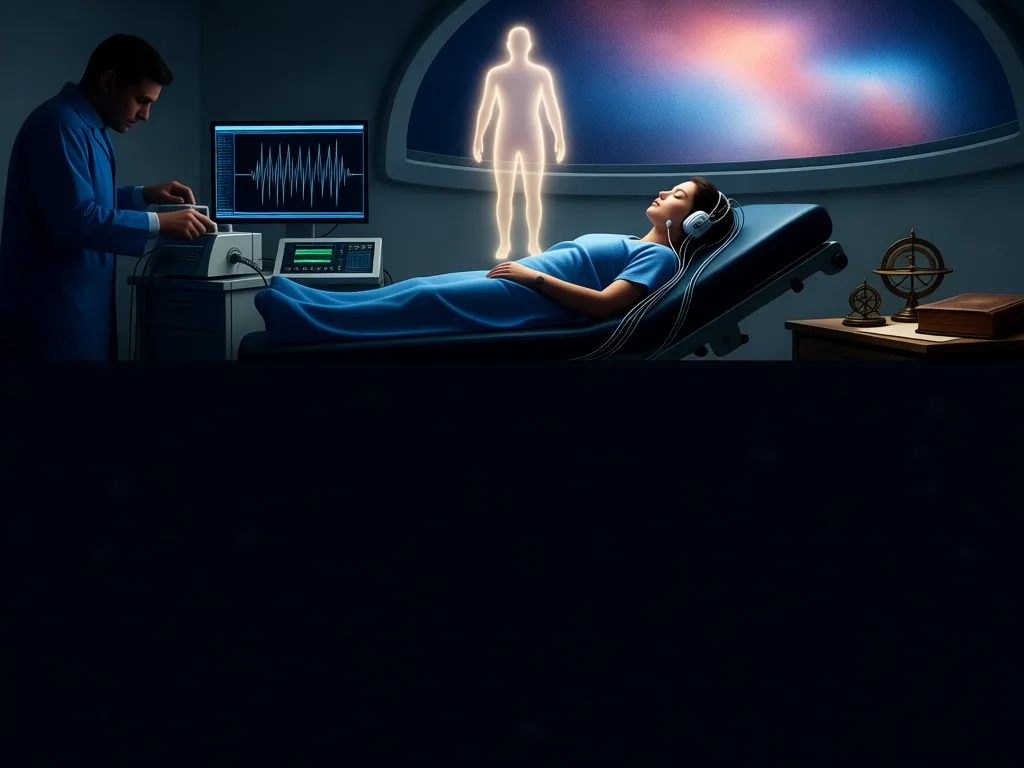
Scientific interest in out‑of‑body experiences (OBEs) has increased since the 1970s. Researchers have approached the topic from neuroscience, psychology, and physiology, seeking to understand the mechanisms that produce the sensation of leaving the body.
Physiological Correlates
Neuroimaging studies have identified activity in the temporoparietal junction (TPJ) during induced OBEs. Disruption of this region through transcranial magnetic stimulation can temporarily produce a feeling of floating away from the self. Similarly, sleep paralysis—a state where REM atonia persists while consciousness is awake—often coincides with vivid sensations of separation, suggesting a link between REM sleep processes and the OBE phenomenon.
Experimental Protocols
One well‑known protocol involves placing a hidden target in a high location within a laboratory and asking participants to attempt an OBE. In a series of trials, a small percentage of subjects reported perceiving the target, though replication has been inconsistent. Critics point out that expectation bias and sensory cues may influence results, emphasizing the need for double‑blind designs.
Psychological Factors
Personality research indicates that individuals with high openness to experience and strong absorption tendencies are more likely to report spontaneous OBEs. Moreover, meditation practice correlates with increased frequency of these experiences, suggesting that altered attentional states play a role. However, correlation does not prove causation, and further longitudinal studies are required.
Safety and Grounding in a Research Context
Even though scientific data are limited, safety considerations remain paramount. Reports of prolonged disorientation, anxiety, or disrupted sleep patterns after intense OBE attempts highlight the importance of a structured approach.
Physical Preparation
Maintaining regular sleep hygiene reduces the likelihood of unintentionally entering sleep paralysis, which can be distressing. Hydration, balanced nutrition, and moderate exercise support overall neurological health, creating a stable platform for any altered‑state work.
Mental Preparation
Setting a clear intention before an attempt helps orient the mind and reduces the chance of drifting into fearful imagery. Practitioners are advised to begin with brief sessions, gradually extending duration as confidence grows.
Grounding Techniques
After an OBE, grounding re‑establishes the connection with the physical body. Simple actions such as feeling the feet on the floor, taking deep breaths, and visualising energy flowing back into the torso are effective. Some researchers suggest a brief period of light stretching to stimulate proprioceptive feedback, which can aid in reintegration.
Future Directions
Current research is hampered by methodological challenges, including the subjective nature of the experience and difficulty in creating objective measurement tools. Emerging technologies, such as high‑resolution functional MRI and wearable EEG, may offer new avenues for real‑time monitoring of brain activity during self‑reported OBEs. Collaborative projects that combine neuroscientists, psychologists, and experienced practitioners could produce protocols that respect both scientific standards and the phenomenological richness of the experience.
In the meantime, individuals interested in exploring astral projection should approach the practice with curiosity, respect for personal limits, and adherence to the safety guidelines outlined above. By grounding personal experimentation in the historical record and the modest body of scientific evidence, practitioners can navigate the practice responsibly while contributing to a broader understanding of human consciousness.
Leave a Reply