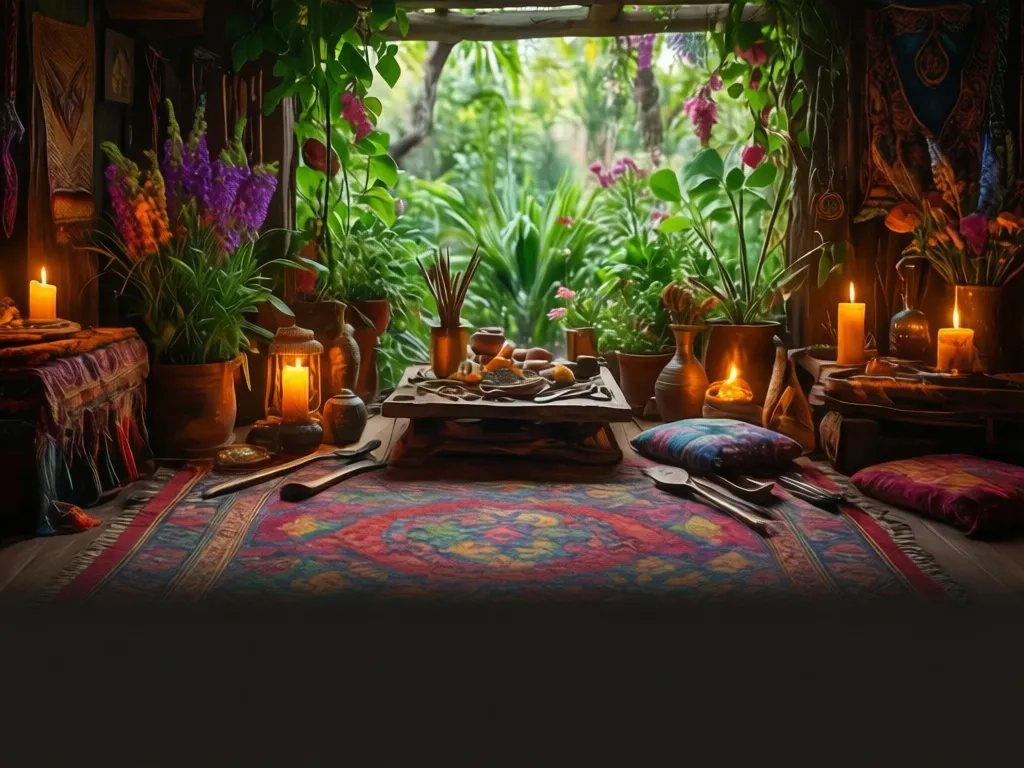
Select a Physical Location
Begin by identifying a place that feels naturally quiet and private. A spare room, a corner of a bedroom, or even a small outdoor nook can serve as the foundation. The space should be easily accessible for regular use but away from high traffic areas that disrupt concentration.
Assess Natural Light and Ventilation
Observe how daylight moves through the area at different times of day. Gentle natural light supports clarity, while softer evening illumination encourages introspection. Ensure the spot can be ventilated to allow fresh air, which helps keep the atmosphere feeling alive.
Consider Flooring and Comfort
If possible, choose a surface that allows you to sit or kneel comfortably. Soft rugs, cushions or a low stool provide physical support for extended sessions.
Clear the Space Energetically
Before any objects are placed, perform a simple cleansing ritual. Light a white candle and move it slowly around the perimeter while visualising any lingering tension dissolving. Follow with a sound cleansing such as a bell, chime or a short chant to break up stagnant energy.
Use Salt or Sage Wisely
Sprinkling a thin line of sea salt across the floor and then sweeping it away after a few minutes can absorb residual negativity. If you prefer plant based methods, burning sage or cedar in a well‑ventilated area works as an alternative, but be mindful of fire safety.
Define the Sacred Boundaries
Marking the limits of the space helps both the mind and spirit recognise its purpose. Simple visual cues like a low rope, a line of crystals, or a row of candles create a subtle perimeter without imposing a rigid structure.
Elemental Representation
Assign each of the four classical elements to a corner of the space. Place a small bowl of water, a candle for fire, a stone for earth and a feather for air. This arrangement balances energies and provides focal points for meditation.
Arrange Ritual Tools Thoughtfully
Lay out the items you will use most often in a way that feels intuitive. An altar cloth can serve as a base; on top of it place your primary divination tool—such as tarot cards, runes or a pendulum—centered within the elemental markers. Surround the central piece with secondary tools like incense, a chalice, a wand or a journal.
Maintain Order and Accessibility
Keep frequently used objects within easy reach, while storing less common items in a nearby drawer or box. This reduces clutter and reinforces the idea that the space is ready for work at any moment.
Infuse Personal Symbolism
Incorporate symbols that resonate with your path. Images of deities, nature photographs, or handcrafted sigils can be hung on the wall or placed on the altar. Choose pieces that evoke the feeling you wish to cultivate during rituals.
Sound and Scent
Playing soft ambient music or nature recordings can deepen the atmosphere. Select scents that support your intention—lavender for calm, frankincense for focus, or cedar for grounding.
Establish a Routine for Activation
Each time you enter the space, perform a brief activation sequence to signal the shift from ordinary to sacred. Light the central candle, say a short invocation, and take three deep breaths while visualising a protective sphere forming around the area.
Grounding Before and After Work
Before beginning a ritual, ground yourself by feeling your feet on the floor and imagining roots extending into the earth. After the session, thank the space, extinguish the candles safely and, if desired, sprinkle a few drops of water on the floor to seal the energy.
Maintain the Space Over Time
Regular upkeep preserves the integrity of the sacred area. Clean the physical surface weekly, replace burnt incense, and rotate any seasonal decorations. Periodically repeat the full cleansing process to refresh the energetic layout.
Adapt as Your Practice Evolves
Allow the space to grow with you. As you acquire new tools or shift your focus, rearrange the altar to reflect those changes. The flexibility of the environment mirrors the fluid nature of spiritual work.
Leave a Reply