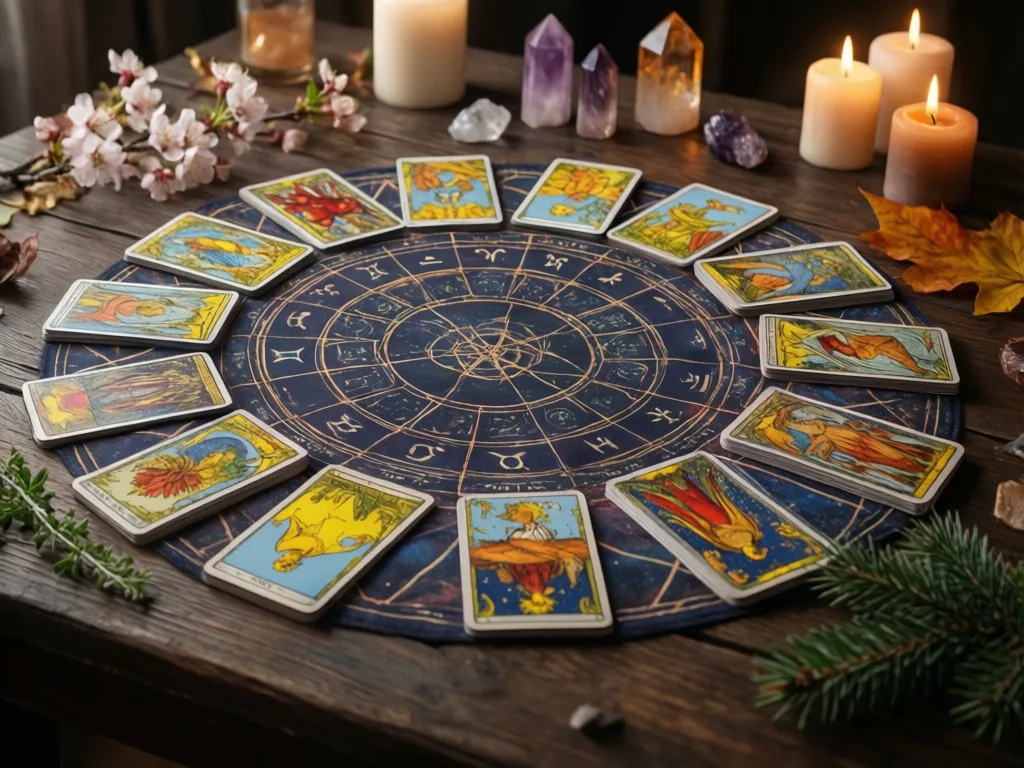
Understanding the Core Links Between Zodiac Signs and Tarot Cards
Each of the twelve zodiac signs has a traditional counterpart in the tarot deck. The connections are rooted in shared elemental qualities, planetary rulers, and mythic archetypes. For example, Aries, a fire sign ruled by Mars, aligns with the Emperor because both embody authority, initiative, and decisive action. Taurus, an earth sign governed by Venus, pairs with the Hierophant, reflecting stability, tradition, and sensual appreciation of the material world. Gemini, the mutable air sign ruled by Mercury, corresponds to the Lovers, highlighting communication, choice, and duality. This pattern continues through the zodiac, creating a reliable framework that can be called upon when constructing a reading.
Elemental Framework
The four classical elements—fire, earth, air, and water—provide the first layer of correspondence. Fire signs (Aries, Leo, Sagittarius) match the Major Arcana cards that emphasize drive, creativity, and expansion such as the Emperor, Strength, and Temperance. Earth signs (Taurus, Virgo, Capricorn) resonate with cards focused on material reality, structure, and perseverance like the Hierophant, The Hermit, and The World. Air signs (Gemini, Libra, Aquarius) pair with cards that stress intellect, relationships, and insight, including the Lovers, Justice, and the Star. Water signs (Cancer, Scorpio, Pisces) find their echo in cards that explore emotion, transformation, and the subconscious, such as the Chariot, Death, and the Moon. Recognizing these elemental bridges helps a reader see why a particular sign‑card pair feels intuitively correct.
Planetary Rulerships
Beyond elements, the planetary ruler of each sign adds nuance to the tarot association. Mars rules Aries and intensifies the Emperor’s assertive energy, while Venus rules both Taurus and Libra, linking the Hierophant’s grounded wisdom with Justice’s balanced fairness. Mercury governs Gemini and Virgo, reinforcing the Lovers’ communicative harmony and the Hermit’s analytical solitude. Jupiter’s influence over Sagittarius and Pisces amplifies the optimism of Temperance and the dream‑like depth of the Moon. Saturn, the disciplinarian of Capricorn and Aquarius, underscores the World’s completion and the Star’s hopeful guidance. When a reader notes the planetary overlay, the interpretation gains depth without requiring additional cards.
Applying Zodiac Correspondences in a Seasonal Tarot Spread
A seasonal spread aligns the twelve zodiac correspondences with the four seasons, allowing the practitioner to explore themes that naturally surface during each time of year. The spread consists of four cards, one for each seasonal sign pair. Spring (Aries, Taurus, Gemini) invites focus on initiation, grounding, and communication. Summer (Cancer, Leo, Virgo) brings attention to emotional nourishment, creative expression, and practical refinement. Autumn (Libra, Scorpio, Sagittarius) encourages balance, transformation, and expansion. Winter (Capricorn, Aquarius, Pisces) asks for structure, innovation, and spiritual surrender. By drawing a card that matches the current zodiac sign and its tarot counterpart, the reader creates a layered narrative that reflects both the external astrological climate and the internal psychological landscape.
Preparing the Deck for the Current Sign
Begin by clearing the mind and setting an intention that references the present zodiac sign. If today falls under Virgo, for instance, state an intention such as “I seek clarity on the practical steps needed for my project.” Shuffle the deck while visualising the Virgo‑Hermit connection, allowing the energy of analysis and introspection to infuse the cards. Some readers find it helpful to place a small symbol of the sign—like a grain of wheat for Virgo—near the deck to reinforce the elemental link.
Reading the Spread by Season
Lay out four positions labeled Spring, Summer, Autumn, and Winter. Draw the first card for the sign currently ruling the season; this card reflects the immediate theme. The second card, drawn for the next sign in the same season, expands the narrative, offering a supportive or contrasting perspective. Continue through the remaining two seasons, each time selecting the tarot card that traditionally aligns with the sign. The final layout presents a year‑long arc: the spring cards reveal seeds of intent, the summer cards illuminate growth, the autumn cards guide release, and the winter cards suggest consolidation or renewal.
Practical Exercises for Deepening the Integration
To move beyond a one‑time spread, incorporate regular practices that reinforce the zodiac‑tarot bond. Consistency turns the correspondence into an intuitive language, allowing subtle insights to surface without forced analysis.
Meditation on the Sign and Card Pair
Choose a sign‑card duo that resonates with a current life question. Sit comfortably, close the eyes, and picture the zodiac symbol—such as the ram for Aries—merging with the image of the Emperor. Allow thoughts, sensations, and images to arise. After ten minutes, open the eyes and note any impressions. This meditation often reveals connections between the assertive drive of Aries and the strategic planning needed in a personal project.
Journaling the Insight
Immediately after the meditation, write a brief entry that captures the experience. Record the date, the sign‑card pair, and any emotions or ideas that emerged. Over weeks, review the journal to detect patterns, such as recurring themes when the Moon appears with Pisces. This reflective habit strengthens the internal map that links astrological cycles with tarot symbolism.
Adapting the Method for Personal Questions
The seasonal spread works well for broad, year‑long themes, but the same correspondences can be applied to specific queries. When faced with a decision about career direction, for example, identify the sign that governs the professional sector—Capricorn for ambition and structure. Pull the World card, Capricorn’s counterpart, and interpret the message as a sign of completion and readiness for a new cycle. If the reading feels ambiguous, consult the planetary ruler (Saturn) for additional context, perhaps drawing the Strength card to highlight perseverance.
By treating the zodiac as a flexible lens rather than a rigid rulebook, readers can tailor each session to the question at hand. The key is to honor the archetypal language of both systems, allowing the symbols to speak in concert rather than compete.
Integrating zodiac correspondences into tarot practice offers a roadmap that aligns personal growth with the larger cosmic rhythm. Whether using a seasonal spread, a focused meditation, or a quick card pull for a specific dilemma, the combined symbolism provides depth, clarity, and a sense of timing that resonates with the natural flow of the heavens.
Leave a Reply