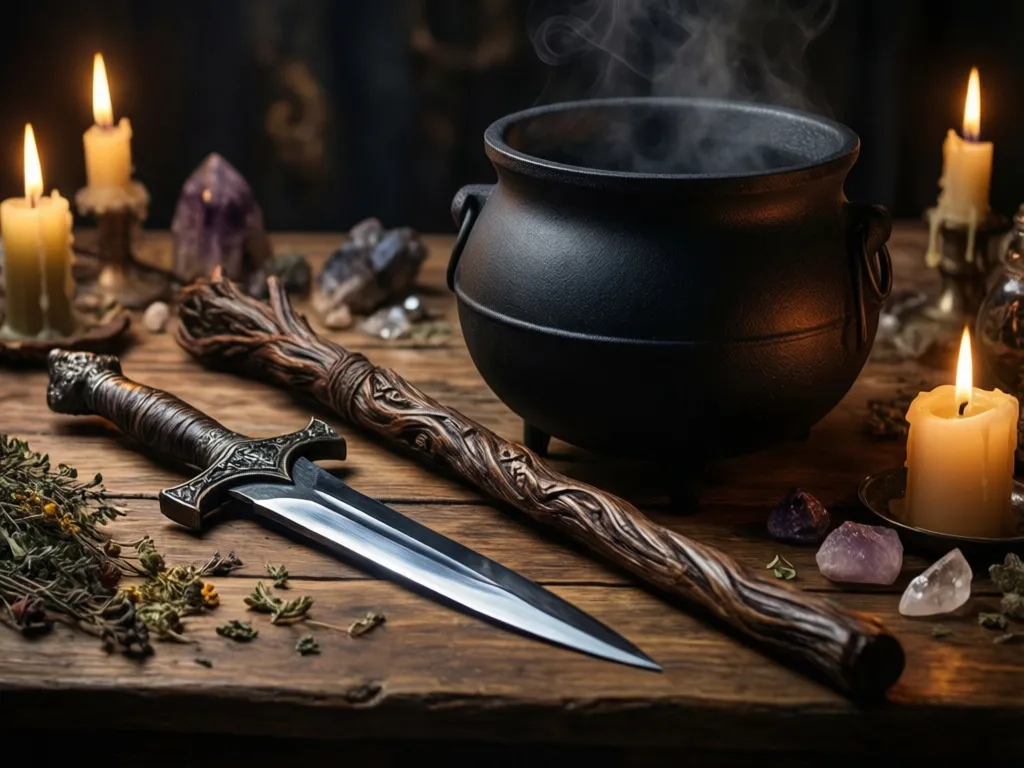
Athame Symbolic Role
The athame is a ritual knife traditionally used to direct energy rather than to cut physical objects. Its blade is often black or dark and represents the element of fire or air depending on the tradition. Holding the athame upright signals intention and focus, allowing the practitioner to shape the flow of magical forces.
Practical Applications
During a circle casting the athame is waved clockwise to draw the protective boundary and counter‑clockwise to release it. It also serves to point at specific points on an altar when calling the quarters, to separate elements in a spell layout, and to mark the start and end of a working. When consecrated the athame becomes a personal talisman, retaining the imprint of the rituals performed with it.
Wand Function and Meaning
The wand is a versatile tool associated with the element of air or wood. Crafted from a single piece of wood, crystal or metal, it channels the practitioner’s will into subtle vibrations. The length and material of the wand influence its energetic resonance, but the core purpose remains the same: to direct intent with precision.
Ways to Use a Wand
In a spell the wand may be pointed at a candle to amplify its flame, or swept through a crystal grid to activate the pattern. It is also used for drawing sigils in the air, for tracing protective circles, and for gently moving incense smoke to carry prayers upward. Regularly cleansing the wand through moonlight or sage smoke maintains its clarity.
Cauldron Role in Ritual
The cauldron is the archetypal vessel of transformation, embodying the element of water and the womb of the goddess. Traditionally made of iron, copper or pewter, it holds liquids, herbs and symbolic offerings that are altered through heat and intention.
Typical Uses
Brewing herbal infusions for an oil or incense, boiling a potion to seal a binding, and placing a personal token inside to store energy are common cauldron practices. The cauldron also serves as a focal point for divination, such as scrying the surface of a reflective liquid. After each use the cauldron should be emptied, rinsed and stored in a sacred space.
Leave a Reply