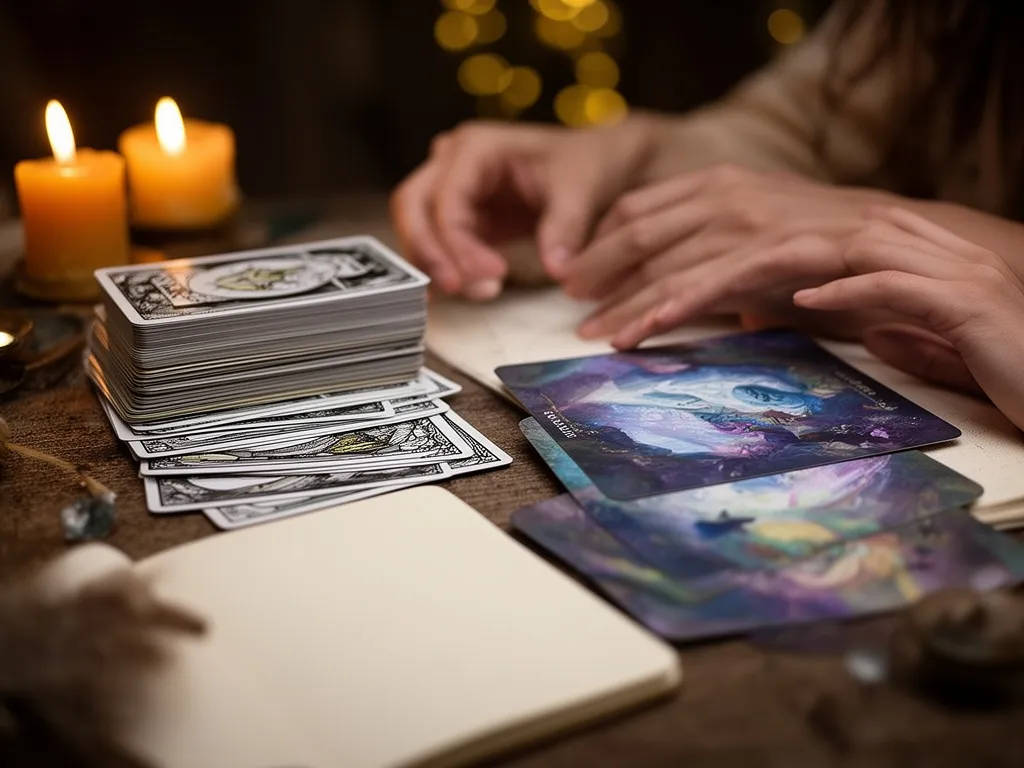
Understanding Oracle Cards and Tarot
Both oracle cards and tarot decks serve as tools for reflection, guidance and personal growth, but they originate from different traditions and follow distinct structures. A tarot deck consists of 78 cards divided into the Major Arcana and the Minor Arcana, each with a fixed set of symbols and a historic lineage that traces back to the 15th century. Oracle decks, by contrast, have no standard number of cards, and each creator can design the imagery, themes and order to suit a particular purpose.
Core structural differences
In tarot the 22 Major Arcana cards represent archetypal journeys, while the 56 Minor Arcana cards are arranged in four suits that mirror the elements of fire, water, air and earth. This structure creates a layered narrative that many readers use for detailed spreads. Oracle decks often forgo suits and numbers; instead they may present a single theme such as angels, nature spirits or chakra energies. Because the format is flexible, the learning curve can be shorter, but the lack of a built‑in system also places more responsibility on the reader to create meaning.
Assessing Your Intended Use
The first step in selecting a deck is to clarify the purpose for which you plan to use it. Are you looking for a tool to deepen meditation, a daily prompt for journaling, or a comprehensive system for elaborate spreads? Your answer will steer you toward the deck that best supports the activity.
Typical uses for tarot
Tarot excels when you need a structured approach. Its consistent symbolism allows you to develop a vocabulary that works across many questions, from career decisions to relationship dynamics. The traditional spreads – such as the Celtic Cross or a three‑card past‑present‑future layout – rely on the predictable placement of cards, making tarot a reliable choice for readers who appreciate methodical analysis.
Typical uses for oracle
Oracle decks shine in contexts that favor inspiration over analysis. A deck focused on affirmations can be shuffled each morning to provide a single guidance sentence, while an angelic oracle may be used for quick check‑ins during a meditation session. If you prefer a more fluid, intuitive style, an oracle deck may feel more natural.
Evaluating Deck Aesthetics and Symbolism
Visual appeal matters because the images you see will influence the thoughts that arise during a reading. Consider the art style, colour palette and cultural references. Some readers gravitate toward the classic Rider–Waite imagery, while others prefer modern, abstract or culturally specific artwork.
Pay attention to how the symbols align with your personal resonance. A deck that feels foreign or unsettling may create resistance, whereas a deck that reflects your worldview can enhance the flow of insight.
Learning Curve and Accessibility
If you are new to divination, the amount of study required can affect your choice. Tarot often demands learning the meanings of 78 cards, understanding reversals and mastering spread layouts. Many beginner guides break the learning process into manageable sections, but the time commitment is still notable.
Oracle decks typically provide a booklet that explains each card in a few sentences. This brevity reduces the memorisation load, allowing you to start reading after a single sitting. However, the lack of a fixed system means you may need to develop your own interpretive framework over time.
Practical Decision Checklist
Below is a short checklist you can run through while evaluating a potential deck. Use it as a mental filter rather than a rigid scoring system.
- Purpose: Do I need structure (tarot) or inspiration (oracle)?
- Visual connection: Does the artwork speak to me?
- Complexity: Am I ready to study 78 detailed meanings?
- Flexibility: Do I want room to create my own spreads?
- Community: Is there an active online or local group that supports this deck?
Community Support and Resources
Finding a supportive community can accelerate your learning. Many tarot decks have dedicated forums, podcasts and study groups that share interpretations, practice spreads and answer questions. Oracle decks, especially niche or artist‑created ones, may have smaller but highly enthusiastic followings on platforms such as Instagram or Facebook.
Check whether the creator offers supplemental material such as video tutorials, workbooks or a newsletter. Access to reliable resources can make the difference between a deck that sits on a shelf and one that becomes a daily practice.
Budget Considerations
Prices for tarot and oracle decks vary widely. A standard tarot deck from a major publisher often falls between $20 and $35, while limited‑edition or hand‑painted decks can exceed $100. Oracle decks can be less expensive because many are self‑published and printed on demand, but premium art books may carry higher price tags. Factor in the cost of a guidebook, protective sleeves and any optional accessories such as a cloth or box.
Testing the Deck Before Buying
Whenever possible, handle a deck in person. Feel the cardstock, test how the cards slide against each other and flip them to see if the images hold your attention. Many online retailers allow you to view high‑resolution photos of each card; use those images to simulate a quick shuffle and draw your own first impression.
If a physical preview is not an option, read reviews that mention tactile quality and overall user experience. Look for patterns in feedback rather than isolated comments.
Making the Final Choice
After you have weighed purpose, aesthetics, learning curve, community support and budget, you can narrow the field to a handful of candidates. Take a moment to pause with each deck, shuffle a few cards and see which one feels most inviting. The right deck will not only align with your practical needs but also spark a subtle sense of excitement.
Remember that choosing a deck is not a permanent commitment. Many practitioners own both a tarot deck for in‑depth analysis and an oracle deck for daily prompts. Switching between them can keep your practice fresh and allow you to explore different facets of divination.
Leave a Reply