Background of the Situation
Emma had spent three years in a partnership that left her feeling drained, anxious, and uncertain about her own desires. She reported frequent arguments, a loss of personal boundaries, and a lingering sense that the other person’s emotional state still affected her mood long after they stopped seeing each other. After reading about energetic ties, she decided to try a cord cutting ritual to clear the residual attachment.
Why a Cord Cutting Ritual?
The idea behind a cord cutting ritual is that intense relationships create an invisible thread of shared energy. When the physical connection ends, the thread can remain, pulling the person back into old patterns. Cutting the cord is a symbolic act that signals the brain to shift its emotional wiring while also providing a ceremonial space for the practitioner to release stored stress.
Psychological Perspective
Research in energy psychology shows that visualisation techniques, when paired with physical gestures, can reduce physiological stress markers. A study published in the Journal of Transpersonal Psychology found that participants who performed a symbolic cutting motion reported lower anxiety scores compared to a control group.
The Ritual in Practice
Emma followed a structured process that she adapted from several reputable sources. The steps are presented in the order they were performed, illustrating how intention, environment and aftercare intertwine.
1. Setting the Space
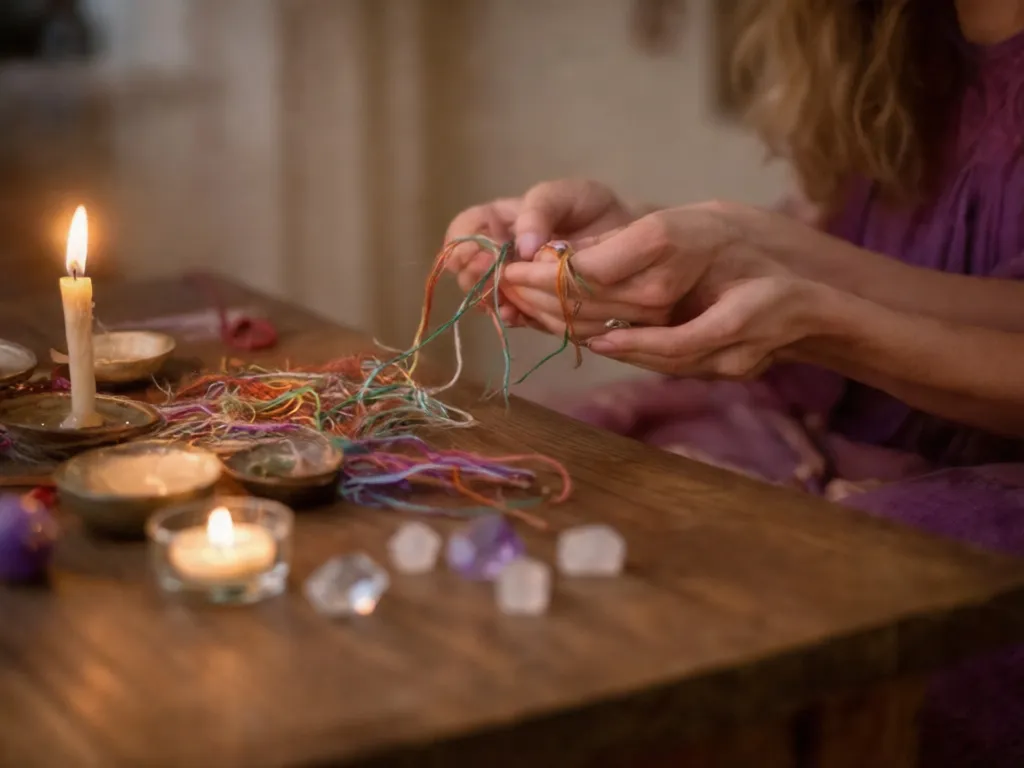
She chose a quiet room where natural light entered in the late afternoon. The space was cleared of clutter, and a small altar was created with a white candle, a piece of rose quartz, and a bowl of salt. The candle was lit to represent illumination and protection.
2. Grounding and Centering
Emma stood barefoot on a soft mat, placed her hands on her hips, and took three deep breaths, feeling the weight of her body through her feet. She visualised roots extending from her soles into the earth, anchoring her present self.
3. Naming the Tie
She spoke aloud, “I acknowledge the energetic tie that existed between me and Alex during our relationship.” Naming the connection gave it form, which is a crucial step in any symbolic work.
4. Visualising the Cord
Emma imagined a thin, silver thread extending from her heart centre to a point behind Alex’s heart. The thread was pictured as flexible but taut, representing the ongoing influence.
5. Cutting the Cord
Holding a small, clean pair of scissors, she performed a deliberate snip motion, saying, “I now release this bond with love and gratitude for the lessons learned.” The sound of the scissors echoed in the room, reinforcing the physical act.
6. Burning the Fragments
She placed a piece of paper with the name “Alex” written on it into the flame of the candle, allowing the smoke to carry away residual attachment. The act of fire transforming the paper symbolizes transmutation of old energy.
7. Sealing the Space
Finally, Emma sprinkled a pinch of salt around the perimeter of the room and thanked the elements for their assistance. The salt acted as a protective barrier, preventing unwanted energies from re‑entering.
Aftercare Practices
After the ritual, Emma engaged in several aftercare actions that helped her integrate the experience and maintain emotional balance.
Hydration and Grounding Food
She drank a glass of water infused with a slice of lemon. Water supports the body’s natural detoxifying processes, while lemon adds a fresh, uplifting scent.
Journaling
Emma spent ten minutes writing in a journal, noting any emotions that surfaced, any physical sensations, and the thoughts that arose about her future. Recording the experience solidifies the shift in perception.
Movement
A short walk in a nearby park allowed her to physically move the energy she had shifted. Gentle movement helps the body release any remaining tension.
Protective Visualization
Before bedtime, she visualised a sphere of white light surrounding her, reinforcing the protective barrier she had created during the ritual.
Outcomes Observed Over Three Weeks
Emma reported a noticeable decrease in intrusive thoughts about her former partner. She felt more confident making decisions without second‑guessing herself. Sleep quality improved, and she was able to engage in new social activities without the lingering sense of being “tethered.” While emotional healing is an ongoing process, the ritual provided a clear turning point that accelerated her recovery.
Key Takeaways for Practitioners
Emma’s case demonstrates that a cord cutting ritual can be both a symbolic and psychologically effective method for releasing unwanted energetic ties. Important elements include a clear intention, a safe environment, a physical gesture that mirrors the mental action, and thoughtful aftercare. Practitioners are encouraged to adapt the details—such as the tools used or the wording of the spoken statements—to match their personal belief system and the specific relationship they are addressing.
Leave a Reply