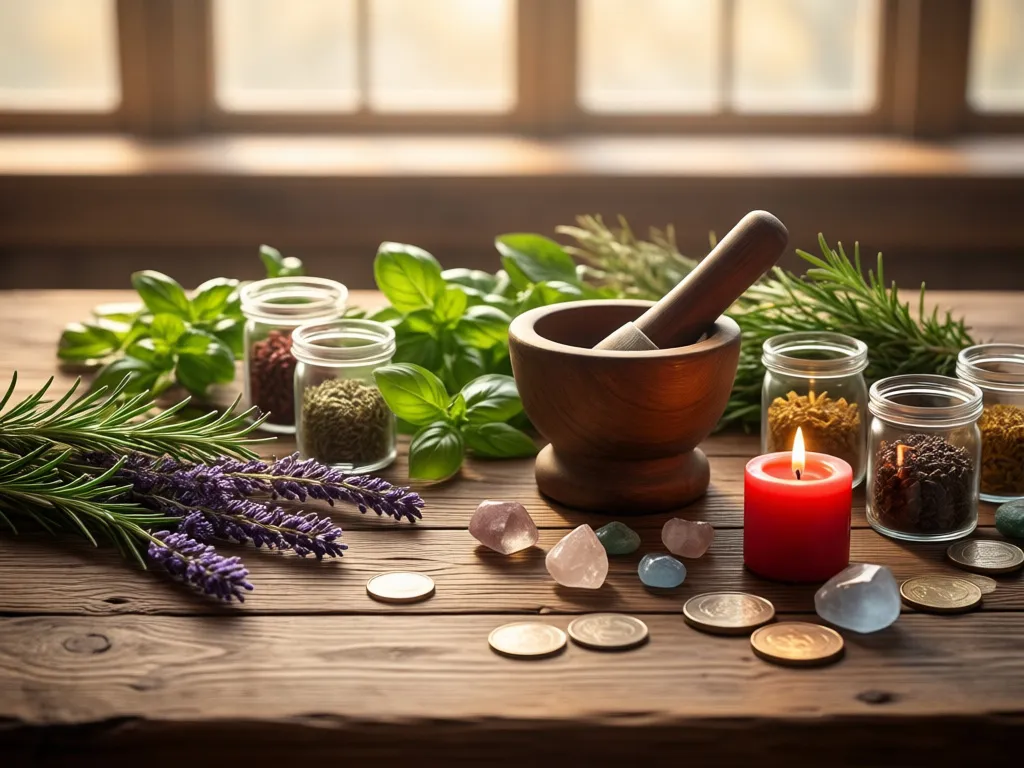
Understanding Herbal Correspondences
In herbal magic each plant carries an energetic profile that mirrors a natural force. The profile is shaped by the plant’s scent, color, growth habit and traditional use. When the profile matches the purpose of a spell the herb acts as a conduit, amplifying the practitioner’s intent without the need for elaborate formulas.
The Role of Intent
Even the most potent herb will produce only the vibration the caster directs. Clear intent creates a focused channel for the plant’s energy, turning a simple handful of dried leaves into a dynamic tool. Before any mixing begins it helps to write a concise statement of what you wish to attract, shield or manifest.
Herbs for Love
Romantic and self‑love work benefits from herbs that emit soft, inviting aromas and display heart‑shaped foliage or red‑purple hues. Their traditional folklore links them to attraction, emotional openness and the nurturing of relationships.
- Rose petals – long associated with affection, the rose’s fragrance opens the heart field and encourages reciprocal feelings.
- Hawthorn berries – the thicket‑forming shrub protects budding love and supports the union of two souls.
- Damiana – a slightly bitter leaf that stimulates desire and heightens sensual awareness.
- Lavender – its calming scent balances passion with peace, creating an environment where love can grow without tension.
- Cinnamon bark – the warm spice ignites fire, adding vigor to love spells that need a spark.
Herbs for Protection
Protection herbs act like a shield, repelling unwanted influences and grounding excess energy. They are often dark‑green, bitter or have a defensive thicket quality in the wild.
- Rowan twigs – historically planted at thresholds, the wood creates a barrier against negative forces.
- Juniper berries – the piney scent clears psychic clutter and wards off ill‑will.
- Garlic cloves – a potent anti‑entity herb whose pungent aroma deters malevolent entities.
- Black pepper – the sharp spice cuts through lingering negativity and strengthens defensive circles.
- St. John’s wort – bright yellow flowers bring protective light, especially useful when working with moon‑based rituals.
Herbs for Prosperity
Prosperity herbs are linked to abundance, growth and financial flow. Their colors often echo gold, green or orange, and many have been used historically in market stalls to attract customers.
- Basil – a staple of wealth magic, its sweet scent invites cash flow and success in business ventures.
- Patchouli – earthy leaves that ground wealth intentions and promote long‑term stability.
- Mint – the refreshing aroma stimulates commerce and quick turnover of resources.
- Clover (especially four‑leaf) – a direct symbol of luck, used to amplify any abundance spell.
- Bay leaf – the leaf’s association with triumph makes it ideal for career advancement and financial goals.
Crafting Simple Herbal Mixes
Once you have identified the herbs that match your purpose, blend them in a way that respects the balance of energies. A basic love blend might combine equal parts rose petals, damiana and a pinch of cinnamon. For protection, mix rowan twigs with crushed garlic and a few juniper berries, then tie the mixture in a small muslin sack. Prosperity mixes often pair basil, mint and a bay leaf, all ground together and stored beneath a green candle.
When preparing a mix, use clean hands, focus on your written intent and visualize the outcome as you stir. The physical motion reinforces the mental direction, sealing the herb’s vibration into the blend.
Integrating Herbs into Your Ritual Space
Herbs can be introduced to a ritual setting in several practical forms. Burning a pinch of incense‑grade lavender or cinnamon releases aromatic waves that linger in the air, subtly shifting the room’s energy. Placing a sachet of protective herbs on a windowsill creates a continuous shield against outside turmoil. Brewing a tea from mint and basil after a prosperity spell allows you to ingest the vibration, reinforcing the intention from within.
Oil infusions also work well. Steeping dried rose petals in a carrier oil for a week produces a love‑enhancing anointing oil that can be applied to candles, altar cloths or directly to the skin.
Ethical Considerations and Sustainability
Respect for the plant kingdom is essential. Harvest herbs from wild sources only when they are abundant and you have permission. Cultivating a small herb garden ensures a renewable supply and deepens your connection to the work. Avoid over‑harvesting endangered species such as hawthorn in regions where it is protected. When possible, purchase from reputable suppliers who adhere to organic and fair‑trade standards.
Finally, remember that magical work is a partnership. Acknowledge the herb’s contribution with gratitude, whether through a simple offering of water, a spoken thank you, or by planting a seed in its honor. This respectful cycle sustains the flow of energetic exchange and keeps your practice aligned with natural law.
Leave a Reply