Fundamental Structure of Rune Casting
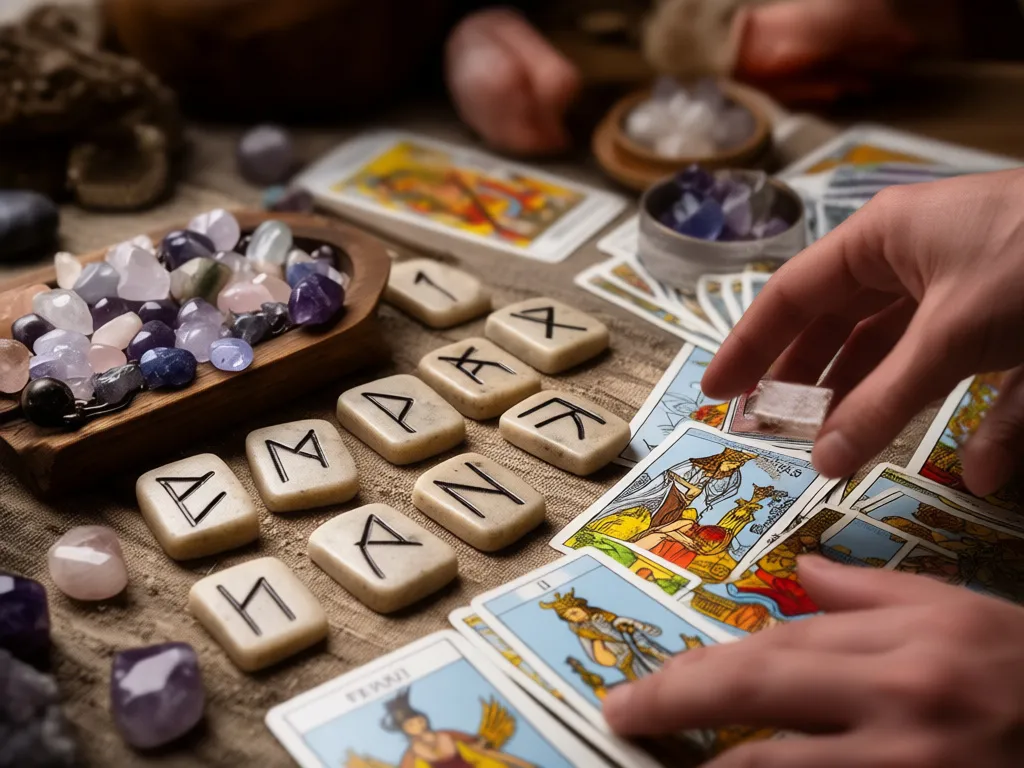
Rune casting relies on a set of carved symbols that each represent a distinct concept, natural force, or mythic narrative. A traditional set contains twenty four marks, each linked to an ancient alphabet used across northern Europe. The physical stones, wood pieces, or metal discs are usually placed on a cloth or tray, and the practitioner draws a number of runes to form a pattern.
Materials and Symbolism
The choice of material influences the tactile experience but does not change the meanings attached to each rune. Because each rune is a single glyph, the symbolism is compact; a single sign can convey a whole story of growth, conflict, or resolution. Practitioners often cleanse the pieces with smoke or moonlight, a step that reinforces the personal connection to the stones.
Core Mechanics of Tarot Reading
Tarot employs a deck of seventy eight cards divided into two groups: the twenty two major arcana that reflect overarching life themes, and the fifty six minor arcana that mirror everyday situations. The cards are illustrated with detailed imagery, allowing the reader to draw on visual cues as well as traditional meanings.
Deck Composition and Archetypes
Each suit in the minor arcana—wands, cups, swords, and pentacles—carries a specific elemental quality. The major arcana follow a narrative journey that many interpret as a map of personal development. Like rune pieces, tarot cards are often purified before a reading, but the process may also include shuffling, which mixes the symbolic energy of the whole deck.
Key Differences in Practice
While both systems aim to reveal insight, they diverge in method, depth, and pacing. Rune casting typically involves drawing three to nine stones, arranging them in a line or a spread that represents past, present and future, or cause, action and outcome. The brevity of each rune encourages concise interpretation, often suited for quick checks.
Method of Casting
Tarot readings usually require a larger layout, ranging from a single‑card pull to a ten‑card Celtic cross. The expanded spread provides room for nuance, allowing the reader to explore layered sub‑questions. Because each card contains a richer visual narrative, the reading can take longer to unpack.
Depth of Symbolic Detail
Runes convey meaning through a singular glyph; the interpreter must rely heavily on personal intuition and contextual clues. Tarot offers a library of established symbols—characters, colors, and scenes—that can be cross‑referenced, making it more accessible for those who prefer visual guidance.
Choosing Between Runes and Tarot
The decision often rests on the nature of the question and the reader’s comfort with each system. Runes excel at straightforward, action‑oriented queries such as “What obstacle lies ahead?” or “Which step should I take now?” Their compact language makes them ideal for daily guidance or for those who favor a minimalist approach.
Questions Best Suited for Runes
When the inquiry centers on a single focus— a career move, a relationship decision, or a health habit—rune casting can deliver clear, direct advice without the need for extensive narrative development.
When Tarot Offers More Value
If the seeker wishes to explore complex emotional patterns, long‑term cycles, or multiple intertwined themes, the broader canvas of tarot provides the necessary scope. The visual storytelling helps uncover subconscious influences that a single rune might not reveal.
Integrating Both Systems
Many practitioners find that using runes and tarot together creates a balanced workflow. One common method is to start with a rune pull for immediate direction, then follow with a tarot spread to examine the larger context. This layered approach respects the speed of rune insight while honoring the depth of tarot analysis.
Complementary Approaches
To blend the practices, select a rune that resonates with the central issue, note its meaning, and then lay out a tarot spread that expands on that theme. For example, drawing the rune Eihwaz—often associated with transformation—might lead to a three‑card tarot spread focusing on the stages of change: the catalyst, the challenge, and the outcome.
By alternating between the two modalities, the practitioner can adapt to the flow of the session, choosing the tool that best matches the energy of the moment.
Leave a Reply