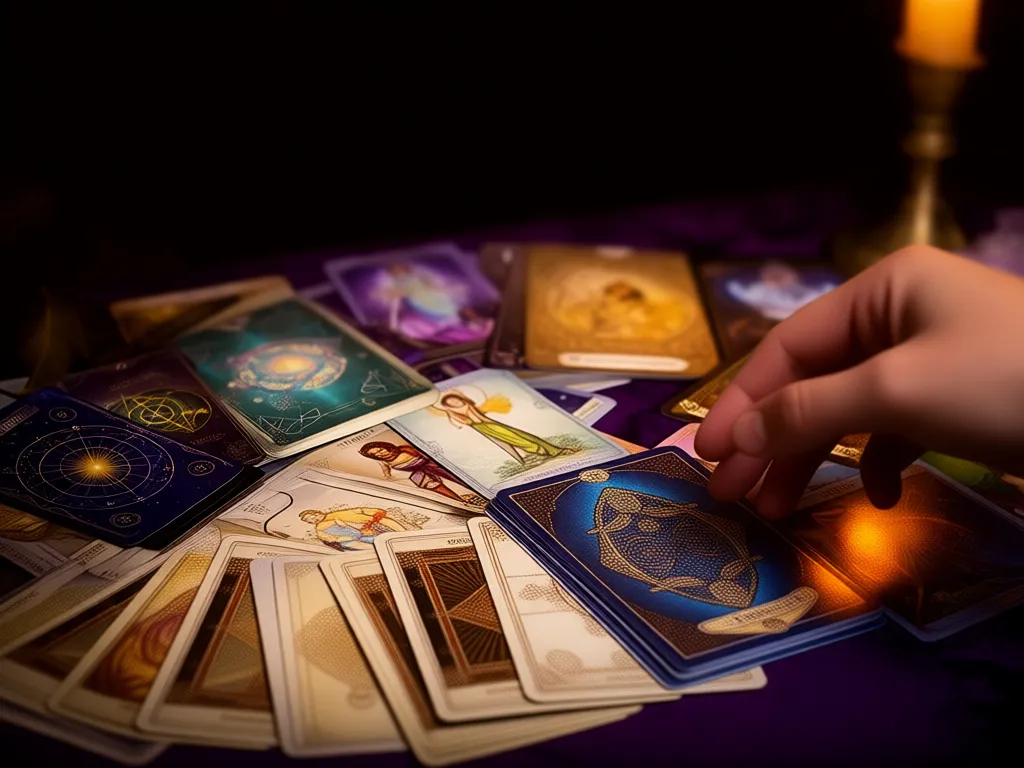
Core Structural Differences
Tarot decks follow a fixed architecture of 78 cards divided into Major Arcana and Minor Arcana. The Major Arcana presents archetypal themes, while the Minor Arcana is organized into four suits that mirror playing cards. This consistent structure creates a shared language that many readers recognize across decks.
Oracle decks have no universal format. An oracle can contain any number of cards, often ranging from a dozen to a hundred, and the themes are chosen by the creator. Because there is no prescribed suit or numbering system, each oracle develops its own narrative flow.
Symbolic Language and Flexibility
Tarot symbolism is layered, drawing from centuries of esoteric tradition, alchemy, astrology and numerology. The imagery on a tarot card carries multiple levels of meaning that can be explored in depth. This depth appeals to readers who enjoy systematic study.
Oracle symbolism tends to be more straightforward. Creators often focus on a single concept per card, such as “Abundance” or “Inner Healing”. The language is frequently contemporary, making the messages feel immediate and less cryptic.
Typical Uses and Reading Styles
Because of its structured progression, tarot is commonly employed for complex spreads that track a timeline, explore cause and effect, or map out detailed pathways. Readers who need a roadmap for a situation often reach for the Minor Arcana’s suit divisions.
Oracle decks shine in single‑card pulls, daily guidance, or thematic meditations. When a practitioner wants a quick affirmation or a focused prompt, an oracle’s simplicity can be more inviting.
Practical Factors When Selecting a Deck
Personal Connection to Artwork
The visual resonance of a deck influences how readily you interpret the cards. Spend time flipping through sample images; notice whether the colors, style and mood stir an intuitive response.
Intended Depth of Study
If you enjoy learning a system that has historical layers, a tarot deck will provide that richness. If you prefer a tool that offers immediate clarity without extensive research, an oracle may be a better match.
Question Types You Most Often Ask
For detailed, multi‑step questions – like “What will the next three months hold for my career?” – tarot’s structured spread can track progression. For single focus queries – such as “What mindset should I adopt today?” – an oracle’s single card prompt works well.
Community and Learning Resources
Tarot benefits from a vast body of books, courses and online forums that reference the same card set. Oracle decks, being unique, often have limited external commentary, so the creator’s guide becomes essential.
Budget and Longevity
A quality tarot deck can be an investment, but the durability of the cards and the depth of use often justify the cost. Oracle decks vary widely; some are inexpensive while others are artisan hand‑crafted. Consider how often you will replace the deck.
Testing a Deck Before Committing
Many shops and online platforms allow you to view high‑resolution scans of each card. Take note of the back design; a solid back helps maintain privacy during a shuffle.
Order a single sample card or a mini version if available. Perform a short draw for yourself – observe how quickly the meaning surfaces and whether the card’s energy feels supportive.
Reflect on the experience after a few days. Does the deck inspire you to record insights, or do you feel resistance? Your intuitive response is a reliable indicator of long term compatibility.
Finally, consult community reviews, but weigh them against your personal reaction. A deck celebrated by others may still feel mismatched for your own practice.
By weighing structure, symbolism, intended use, personal resonance and practical considerations, you can confidently choose whether an oracle deck or a tarot deck best serves your spiritual journey.
Leave a Reply