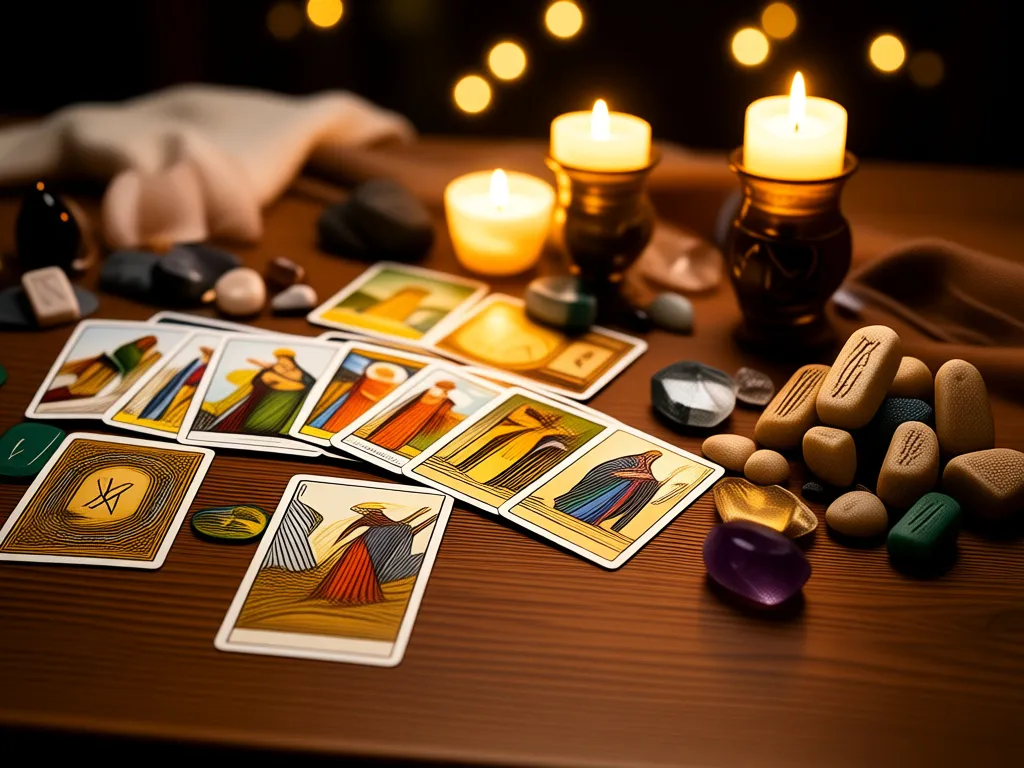
Understanding the Core Structure of Runes
Runes are a set of symbols that originated in ancient Northern Europe. Each rune carries a name, a visual form and a layered meaning that blends practical advice with mythic resonance. When a practitioner casts a handful of runes, the symbols that appear are read in relation to each other and to the question asked. The process is straightforward: a set of stones or wooden sticks is shuffled, a few are drawn, and their meanings are interpreted in sequence.
Key Characteristics of Rune Reading
Rune reading emphasizes brevity. A single rune can provide a concise answer, while a three‑rune spread can outline cause, action and outcome. The symbols are less pictorial than tarot cards, relying more on linguistic roots and historical context. Because the system is compact, it works well for questions that need direct guidance or a quick check of energetic flow.
How Tarot Cards Organise Meaning
Tarot consists of a larger deck, typically 78 cards, divided into Major and Minor Arcana. Each card contains rich visual symbolism, narrative elements and positional meanings that change depending on its placement in a spread. The depth of imagery allows readers to explore multiple layers of a situation, from surface concerns to deeper emotional currents.
Key Characteristics of Tarot Reading
Tarot excels at providing a broad overview. A full‑size spread can map out timelines, relationships, challenges and potentials in a single session. The visual nature of the cards supports storytelling, making it suitable for complex questions that involve many variables or require a nuanced emotional map.
Matching Method to Question Type
When deciding whether to reach for runes or tarot, consider the shape of the inquiry. If the question is specific, time‑bound or seeks a clear action step, runes often deliver a sharp answer. For example, asking “What should I focus on today?” can be answered by a single rune drawn for the day.
If the question involves multiple factors, such as “How will my career change affect my relationships over the next year?” a tarot spread can lay out the interconnections, showing how professional shifts may ripple through personal life.
Practical Criteria for Choosing the Right Tool
Below are practical decision points you can run through before a reading. First, assess the level of detail you need. Second, think about the time you have available. Third, reflect on your personal familiarity with each system.
Detail Level
Low detail – choose runes. High detail – choose tarot.
Time Availability
A quick session of a few minutes suits rune casting. A longer session of 30 minutes or more fits tarot.
Personal Comfort
If you feel a stronger connection to the mythic stories of the Norse gods, rune reading may feel more authentic. If you are drawn to the visual storytelling of the Rider‑Waite deck, tarot will likely resonate better.
Integrating Both Systems in a Single Practice
Many experienced practitioners do not see runes and tarot as mutually exclusive. One effective approach is to start with a rune draw for immediate focus, then follow with a tarot spread to explore the surrounding context. For instance, after pulling the rune Ansuz for communication, you might lay out a three‑card tarot spread to see who the message involves, what obstacles exist, and the best way to deliver it.
Sample Hybrid Workflow
1. Formulate a clear question.
2. Shuffle the rune set and draw one or three runes.
3. Note the core guidance from the runes.
4. Select a tarot spread that complements the rune insight, such as a single‑card pull for each rune element.
5. Synthesize the two layers of information into a cohesive plan.
When Not to Use Either System
Both runes and tarot are tools for insight, not substitutes for professional advice in legal, medical or financial matters. If a question involves legal contracts, medical diagnoses or high‑stakes financial decisions, seek qualified experts first. Use divination to explore emotional or spiritual aspects that accompany those practical concerns.
Building Confidence in Your Choice
Developing trust in the method you select comes from regular practice. Keep a journal of your readings, noting the question, the method used, the symbols that appeared and the outcome. Over time patterns will emerge, showing you which system delivers the most reliable guidance for different areas of your life.
By aligning the nature of your question with the strengths of rune casting or tarot, you can streamline your practice, reduce uncertainty and enhance the clarity of the insight you receive.
Leave a Reply